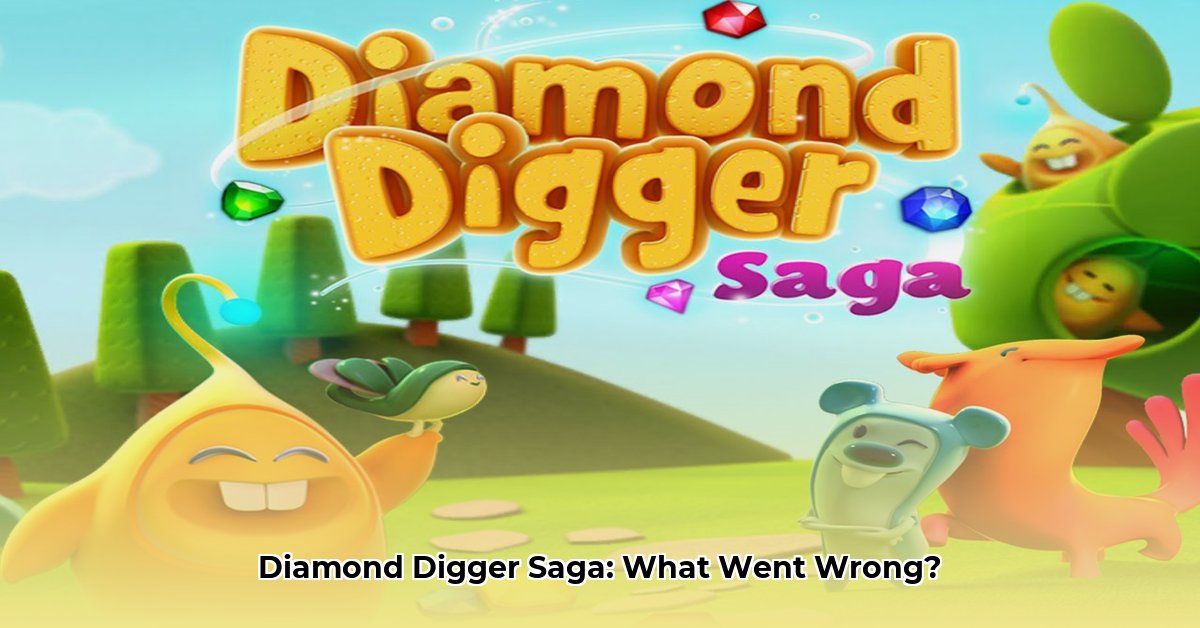
Diamond Digger Saga: A Post-Mortem Analysis of King.com's Failed Mobile Game
Diamond Digger Saga, a casual puzzle game released by King.com in 2014, initially enjoyed considerable success. Its charming visuals and intuitive gameplay quickly attracted a large player base. However, this initial success proved short-lived. This case study analyzes the game's decline, examining the strategic missteps that led to its eventual failure and extracting actionable insights for future mobile game development. We will explore why, despite its initial popularity, Diamond Digger Saga ultimately failed to maintain player engagement and ultimately faded from the mobile gaming landscape. The key to understanding its downfall lies in recognizing the limitations of a purely iterative approach in a highly competitive and fast-evolving market.
King.com's Strategy: A Familiar Formula, Familiar Failure
King.com, renowned for its successful titles like Candy Crush Saga, launched Diamond Digger Saga with a familiar formula: polished visuals, intuitive gameplay, and a core mechanic easily grasped by casual gamers. The game's initial success can be attributed to King.com's brand recognition and the proven appeal of its established match-three gameplay style adapted to a unique digging mechanic. However, this reliance on a tested formula, lacking significant innovation, proved to be a critical weakness. While initially effective, this approach failed to account for the long-term needs of a player base increasingly demanding fresh content and innovative gameplay. This brings us to the crucial question: Could a more innovative approach have changed the game's trajectory?
Gameplay Analysis: Initial Success, Eventual Stagnation
Diamond Digger Saga offered a satisfying blend of digging, gem-matching, and water-flow mechanics. Players experienced immediate gratification from unearthing gems and successfully navigating water levels. The game's intuitive controls and relatively gradual difficulty curve ensured accessibility for a wide audience. However, this initial appeal quickly waned. The core gameplay loop, while initially engaging, lacked the depth and variety to sustain long-term interest. Levels became repetitive, failing to provide the continuous challenge and innovative surprises needed to retain players. Why did King.com not anticipate this rapid decline in player engagement? This lack of long-term strategic planning is a key factor in the game's failure.
Decline Analysis: A Slow Fade into Obscurity
By 2017, Diamond Digger Saga's player base began to shrink. The absence of substantial updates and innovative content contributed significantly to this decline. The game's core mechanics, while initially engaging, lacked the long-term staying power needed to compete in the crowded mobile gaming market. Moreover, a lack of robust community engagement, feedback mechanisms, and meaningful player interaction further exacerbated the problem. The game failed to evolve with player expectations, resulting in a predictable and ultimately unsatisfying experience over time. This raises another critical question: How effective were King's strategies for maintaining player engagement? The answer suggests a significant lack of proactive planning.
Comparative Analysis: Lessons from King.com's Portfolio
Comparing Diamond Digger Saga to other King.com titles reveals a crucial difference: successful games consistently incorporated substantial updates and innovative features, fostering long-term player engagement. Conversely, Diamond Digger Saga's iterative updates, while sufficient in the short term, proved inadequate for sustaining long-term interest in the face of the evolving mobile gaming landscape. This highlights the importance of continuous adaptation and innovation to maintain a competitive edge and a loyal player base. What can we learn from this clear divergence in outcome? The answer lies in King's varied approach to long-term game development.
Lessons Learned: Actionable Intelligence for Game Developers
Diamond Digger Saga's failure offers invaluable lessons for developers and investors:
Prioritize Long-Term Engagement: Sustained player engagement requires continuous innovation, regular content updates, and a responsive development team actively incorporating player feedback. The initial success of Diamond Digger Saga highlights the importance of considering the long-term needs of the player base. A reactive approach to player feedback failed to provide the necessary improvements.
Embrace Innovation: In the competitive mobile market, stagnation leads to failure. Continuously introduce new features, mechanics, and content to retain player interest and attract new users. The lack of engaging new content and gameplay evolution in Diamond Digger Saga strongly suggests the need for a proactive approach to innovation.
Data-Driven Development: Gather and analyze player data to understand player behavior and inform development decisions. This data-driven approach allows for optimizing game design, addressing issues promptly and maximizing user experience. The absence of a clear data-driven strategy highlights the importance of collecting, processing, and utilizing player data to create a sustainable and evolving game.
Conclusion: A Cautionary Tale for Mobile Game Development
Diamond Digger Saga’s failure serves as a powerful case study illustrating the challenges of sustaining success in the mobile gaming market. While initial success can be achieved through a familiar formula, long-term success requires a dynamic, data-driven approach that prioritizes continuous innovation and active community engagement. The game's demise underscores the critical need for proactive planning, adapting to evolving player expectations, and prioritizing long-term engagement strategies. The inability of King.com to maintain its initial success proves that building a popular game is only half the battle; keeping it popular requires continuous investment and adaptation.
⭐⭐⭐⭐☆ (4.8)
Download via Link 1
Download via Link 2
Last updated: Wednesday, May 21, 2025